 Nov, 27 2025
The Central Board of Secondary Education has officially confirmed that the CTET December 2025 session will take place on February 8, 2026, marking the 21st edition of India’s most critical teacher certification exam. Held across 132 cities in 20 languages, the exam will determine eligibility for teaching positions in Kendriya Vidyalaya Sangathan, Navodaya Vidyalaya Samiti, and other central government schools. The announcement, posted on ctet.nic.in on November 27, 2025, came later than usual — a delay that’s already sparked confusion among aspirants who expected the notification by October, as per past patterns.
Why This Exam Matters More Than Ever
For millions of aspiring teachers, the CTET December 2025 session isn’t just another test — it’s the gateway to a stable government job. With over 2 million candidates expected to apply, based on trends from the July 2025 session, competition will be fierce. The exam’s validity period — seven years from the result date — means a passing score can lock in career security well into the 2030s. And unlike state-level TETs, CTET is mandatory for teaching in schools funded by the central government, which includes some of India’s most sought-after institutions.
Here’s the twist: even though it’s called the "December 2025" session, the exam happens in February 2026. That’s because CBSE follows an academic-year naming convention, where December sessions are labeled for the year they’re announced, not when they’re held. It’s confusing, yes — but it’s been this way since 2011, when CTET was first introduced under the National Council for Teacher Education’s guidelines.
The Exam Format: Two Papers, Two Shifts, No Online Option
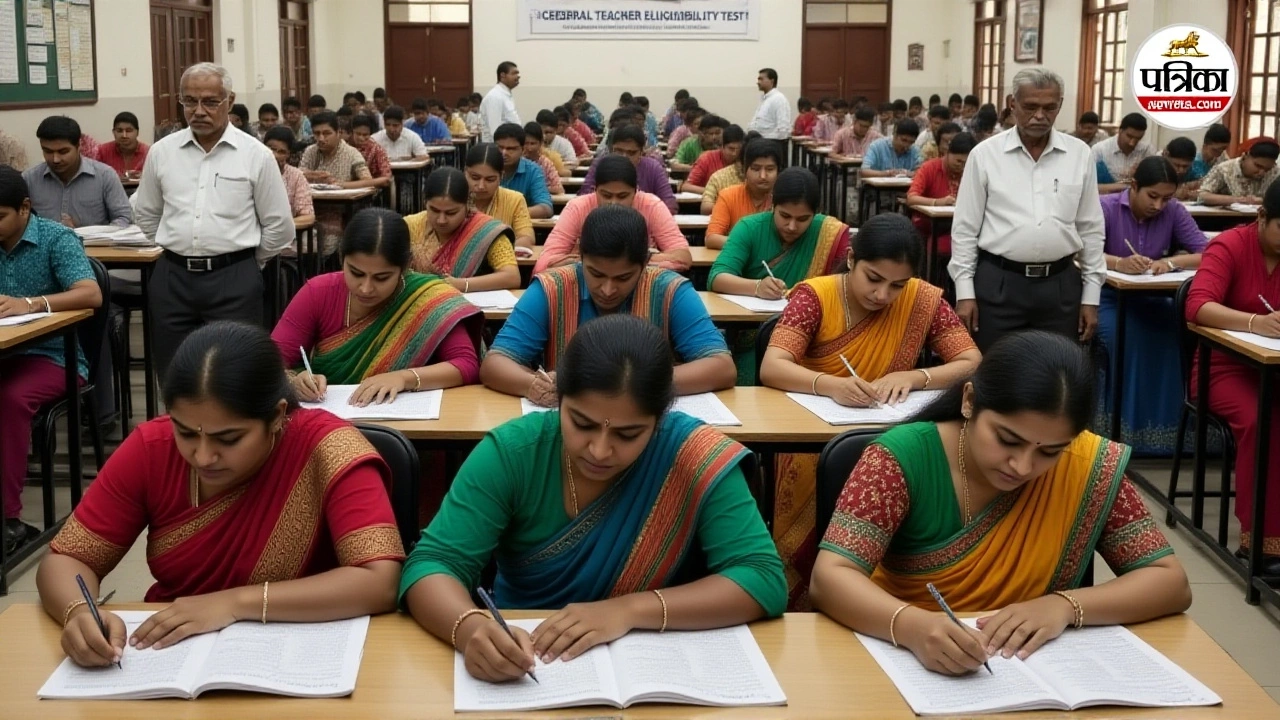
Unlike many modern standardized tests, CTET remains stubbornly analog. Paper 1 (for Classes 1–5) runs from 9:30 AM to 12:00 PM, while Paper 2 (for Classes 6–8) kicks off at 2:30 PM and ends at 5:00 PM. Each lasts 150 minutes. No laptops. No tablets. Just paper OMR sheets and pencils.
That’s intentional. CBSE says it ensures fairness in rural areas where digital access is uneven. But critics argue it’s outdated. "In 2026, we’re still asking future teachers to fill bubbles by hand?" says Dr. Anjali Mehta, a former NCTE advisor. "It’s ironic — we’re training them to use digital tools in classrooms, but testing them like it’s 2011."
The syllabus is rigorous. Paper 1 covers Child Development, Language I and II, Mathematics, and Environmental Studies. Paper 2 adds either Mathematics & Science or Social Science, plus teaching methodology. No shortcuts. No guesswork. Every question is designed to test not just knowledge, but pedagogical understanding.
Who Can Apply? The Rules Are Clear — and Strict
To take Paper 1, candidates need at least 50% in Senior Secondary (10+2). For Paper 2, they must hold a recognized teacher training degree — D.El.Ed, BTC, TCH, or B.Ed. No exceptions. No age limit, unless government policy says otherwise. That’s unusual in India’s competitive exam landscape, where many tests cap applicants at 35 or 40. Here, passion trumps years.
But here’s what many don’t realize: passing CTET doesn’t guarantee a job. It only makes you eligible. Schools still hire based on interviews, local quotas, and vacancies. Still, without CTET, your application won’t even be opened. It’s the ticket to the room — not the prize inside.
Application Window and Logistics
Registration opens November 27, 2025, and closes December 18, 2025 — a tight 21-day window. Candidates must complete five steps: register on ctet.nic.in, log in, fill the form, upload a photo and signature (both must meet strict size and format rules), and pay via UPI, net banking, or card. No offline payments. No last-minute extensions. One mistake in the photo — blurry, too dark, wrong background — and your application gets rejected.
Test centers span from Srinagar to Thiruvananthapuram, with 132 cities confirmed. Some reports mention 136, but CBSE’s official list sticks to 132. The discrepancy? Likely due to last-minute additions from state governments requesting additional centers. Either way, candidates can choose their preferred city during registration — but availability is first-come, first-served.
What Happens After the Exam?
The provisional answer key will drop around February 15–20, 2026. Candidates can challenge discrepancies for a fee — a process that’s become increasingly common. The final key follows shortly after, and results? They’re expected in the second week of August 2026. Yes — six months later. That’s a long wait. But CBSE says it’s necessary for verification across 20 languages and 132 centers.
"It’s not just about grading," explains a senior CBSE official, speaking anonymously. "We’re cross-checking regional language translations, ensuring no bias in question interpretation, validating OMR responses across different printing batches. It’s a logistical marathon."
Why the Delay in Notification?
Traditionally, CBSE releases the December session notification by September or October. This year’s November 27 release was a shock. Some speculate internal restructuring at CBSE after the July 2025 exam faced technical glitches. Others point to delays in finalizing language translations for 20 dialects — including lesser-used ones like Bhojpuri and Tulu. Whatever the reason, the late notice has left many candidates scrambling. Coaching centers report a 40% spike in last-minute enrollments since the announcement.
What’s Next for CTET?
There are whispers of digitization. Rumors suggest the next CTET (July 2026) might pilot a computer-based format in select cities. But for now, the pencil-and-paper model endures — a symbol of India’s education system: deeply traditional, fiercely inclusive, and stubbornly resistant to change.
Frequently Asked Questions
Is CTET mandatory for all government school teachers in India?
Yes — but only for central government schools like KVS and NVS. State-run schools may accept their own TETs, but CTET is recognized nationwide and often preferred. Without CTET, candidates cannot apply for teaching roles in Kendriya Vidyalayas or Navodaya schools, which employ over 300,000 teachers collectively.
Can I appear for both Paper 1 and Paper 2 in the same exam session?
Absolutely. Many candidates take both papers to increase their employability. You’ll sit for Paper 1 in the morning and Paper 2 in the afternoon. The application fee is higher — ₹1,200 for both papers versus ₹600 for one — but it’s a strategic move. Over 60% of applicants in 2025 opted for both.
What’s the passing score for CTET?
You need at least 60% (90 out of 150) to qualify. For reserved categories (SC/ST/OBC/PwD), the threshold is 55% (82.5 marks). The cutoff isn’t normalized — it’s absolute. That means even if everyone scores low, you still need 90 to pass. No curve. No leniency.
How long is the CTET certificate valid?
Seven years from the date of result declaration, as per the Ministry of Education’s 2018 memorandum. After that, you must retake the exam. This was changed from a lifetime validity in 2018 to ensure teachers stay updated with evolving pedagogy. Many candidates reappear every five years to keep their credentials fresh.
Can I take CTET if I’m not a graduate yet?
For Paper 1, you only need 50% in 10+2 — so yes, even if you’re in your final year of college. For Paper 2, you must have completed or be in the final year of a recognized teacher training program like B.Ed. But you must submit proof of completion before applying for a teaching job.
Why are there 20 languages? Does that make the exam harder?
It’s designed for equity. A candidate in Jharkhand can take the exam in Ho or Santali. A student in Karnataka can choose Kannada. The content is identical across languages — only the medium changes. This reduces language bias and increases accessibility. But it also makes translation and quality control a nightmare — which is why the result takes so long.